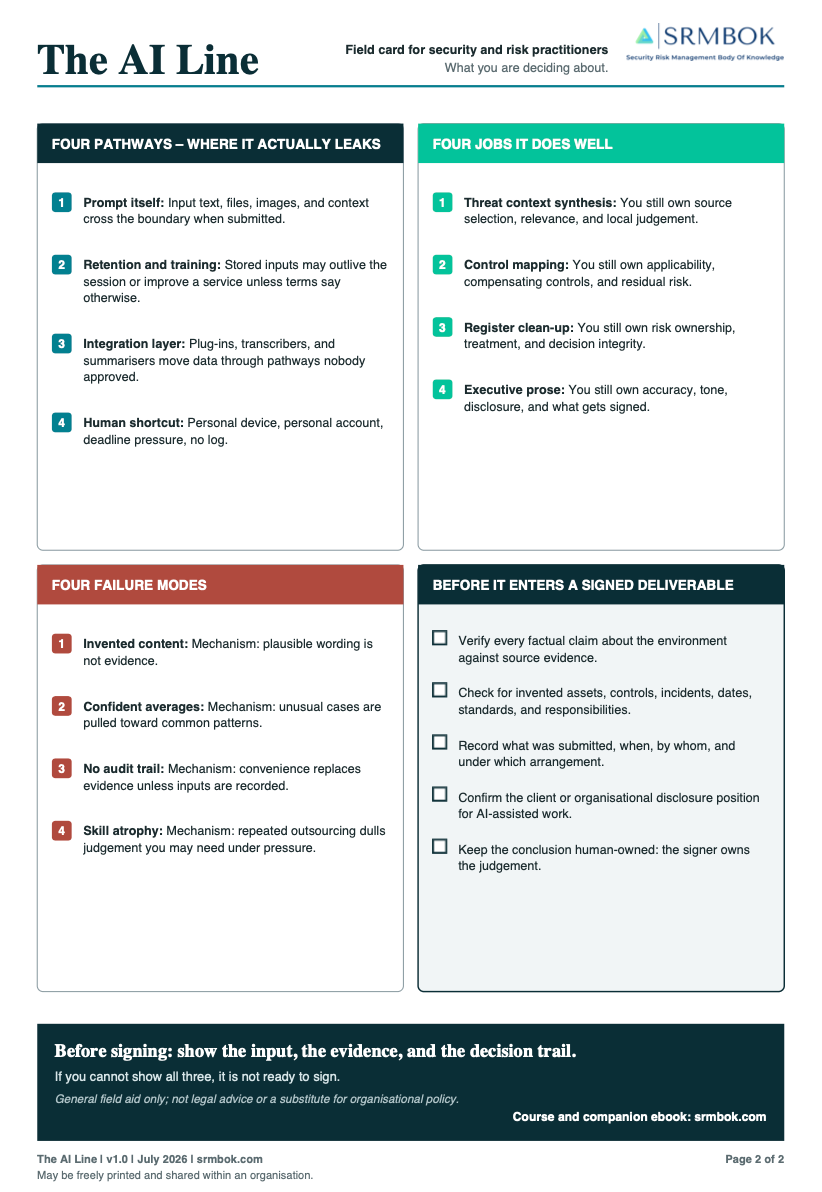

Write physical security specifications that hold up across sites, contractors and countries.
Every organization with more than one site runs into the same problem: the security measures at one facility bear no resemblance to the next, contractors quote against different assumptions, and nobody can say what adequate means for a given threat level. It gets worse across borders, where terminology, materials and legislation all change.
This guide fixes that by separating two things most specifications muddle together: the guidelines for each type of control, and the minimum recommended specifications for a given threat posture. The guidelines can be handed to contractors and staff with a need-to-know. The specifications you actually apply, and the risk assessment behind them, stay with you.
What's inside
- Threat postures and security-in-depth: the building blocks you put in place for your assessed threat context, and how to escalate them quickly when the context changes
- Physical security specifications
- Access control to premises and secure areas
- Physical barriers and hardening
- Locks and keys
- Alarms, sensors and monitoring devices
- Security cabinets and containers
For each area the guidelines come first and the suggested minimum specifications follow, so you can adopt the guidance as written and calibrate the specifications to your own risk assessment.
Who it is for
Security managers responsible for more than one site, consultants writing specifications for clients, facility and project managers briefing contractors, and anyone standardizing physical security across a portfolio.
PDF download. Single-organization license.
Included in the SRMBOK Library at the Practitioner level and above. Compare Library plans.